
Features Articles

Child Development Stages: A Complete Guide for Parents
Understanding Psychological Aspects of Kids
Understanding child development is the foundation of effective parenting. From a toddler’s first words to a teenager’s identity struggles, every stage brings new changes in thinking, emotions, and behavior.
This guide explains how children grow, why they behave the way they do, and what you can do to support them at every stage.
What Is Child Development?
Child development refers to the process through which children grow physically, emotionally, socially, and cognitively over time.
It is not random. Development follows patterns explained by researchers like Jean Piaget, who studied how children think, and Erik Erikson, who focused on emotional and social growth.
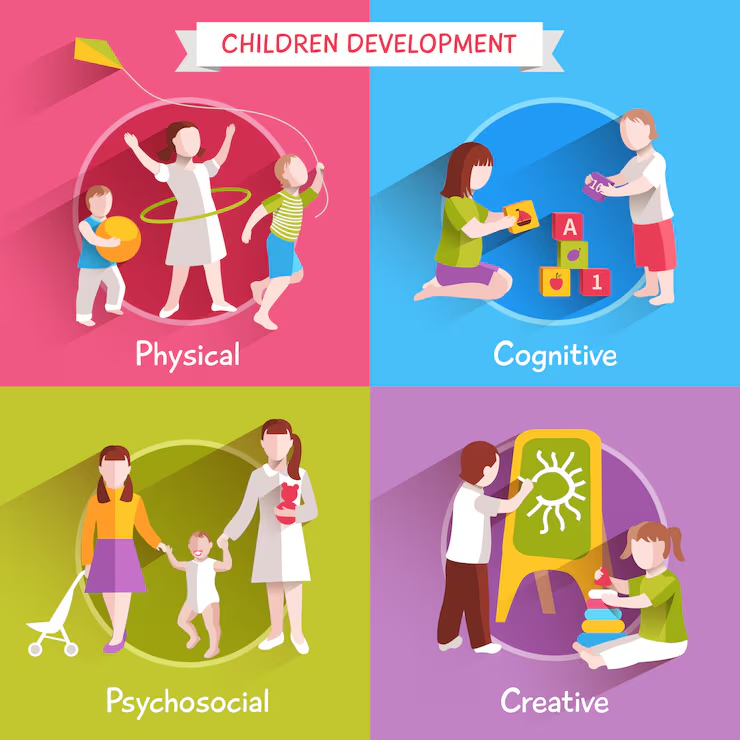
The Four Key Areas of Development
- Cognitive Development (Thinking & Learning)
This includes how children:
- Solve problems
- Understand the world
- Develop memory and reasoning
Children move from simple thinking to more complex reasoning as they grow.
- Emotional Development
This involves:
- Understanding feelings
- Managing emotions
- Building confidence
Emotional development is critical for mental health and relationships.
- Social Development
Children learn:
- How to interact with others
- Sharing and cooperation
- Social rules and norms
This is strongly influenced by environment and observation, as explained by Albert Bandura.
- Physical Development
This includes:
- Growth in height and weight
- Motor skills (walking, writing)
- Coordination
Child Development Stages Explained
Toddlers (1–3 Years)
At this stage, children are:
- Learning to walk and talk
- Exploring independence
- Having frequent tantrums
Key Focus:
- Language development
- Emotional expression
- Basic social interaction
Common Issue: Tantrums due to limited communication skills
Early Childhood (4–7 Years)
Children begin to:
- Ask many questions
- Develop imagination
- Form friendships
Key Focus:
- Learning through play
- Emotional control
- School readiness
This is where habits and behavior patterns start forming.
Middle Childhood (8–12 Years)
At this stage:
- Logical thinking improves
- Peer influence increases
- Self-esteem develops
Key Focus:
- Academic skills
- Confidence building
- Social relationships
Adolescence (13–18 Years)
Teenagers experience:
- Identity formation
- Emotional intensity
- Independence seeking
Key Focus:
- Decision-making
- Emotional regulation
- Peer and social identity
Why Understanding Development Matters
When parents understand development:
- They respond appropriately to behavior
- They reduce conflict
- They support healthy growth
For example, a toddler’s tantrum is not misbehavior—it is a developmental limitation.
Common Parenting Mistakes
- Expecting adult-like behavior from children
- Comparing children to others
- Ignoring emotional needs
- Using punishment instead of guidance
Practical Parenting Strategies
- Respond According to Age
Adjust expectations based on the child’s developmental stage.
- Encourage Communication
Help children express feelings using words.
- Build a Safe Environment
Children develop best when they feel secure and supported.
- Model Behavior
Children learn by observing adults.
Final Thoughts
Child development is a continuous journey. Each stage builds the foundation for the next.
When you understand how children grow, you can guide them with patience, confidence, and clarity.