
Screen Addiction in Children
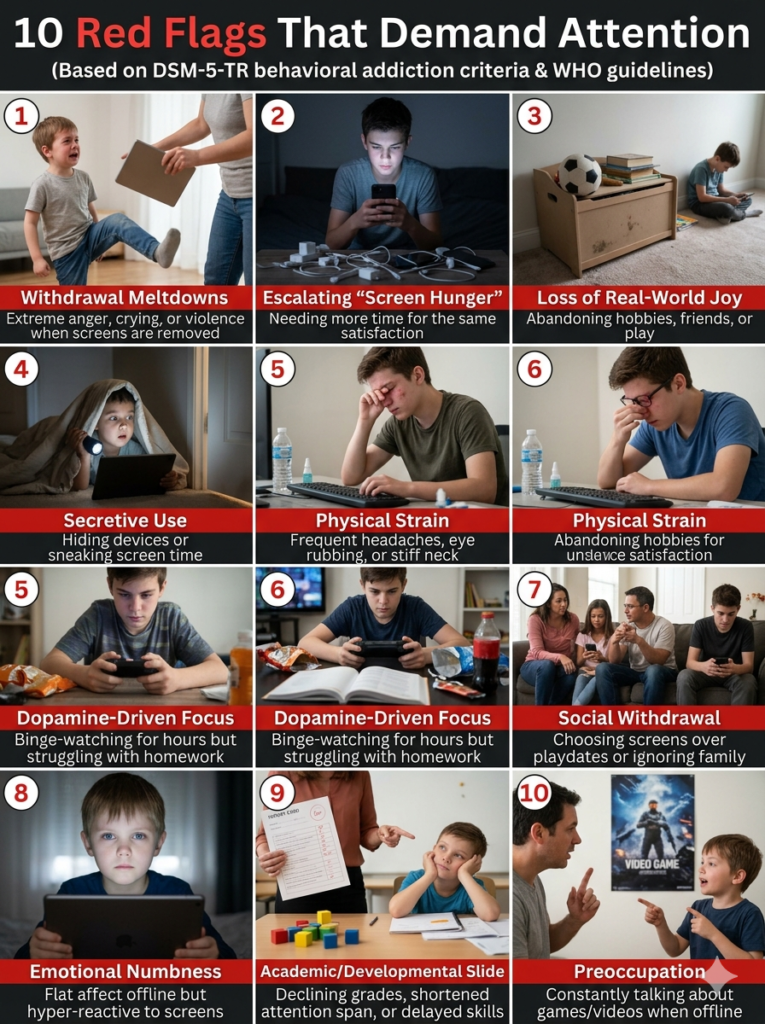
Screen Addiction in Children: Effects on Development and How Parents Can Respond
Screen addiction in children has become one of the most serious modern parenting challenges. From mobile phones to tablets and television, excessive screen exposure is now affecting children’s physical, emotional, and cognitive development.
While technology is not harmful by itself, uncontrolled and excessive use can interfere with normal developmental processes. Understanding how screen addiction impacts children at different ages helps parents take timely and effective action.
What Is Screen Addiction?
Screen addiction refers to excessive or compulsive use of digital devices that interferes with daily functioning, behavior, and development. Children who are overly dependent on screens may show irritability, reduced attention span, and difficulty engaging in real-world activities.
From a psychological perspective, repeated screen exposure activates the brain’s reward system, reinforcing the habit and making it difficult to control (American Academy of Pediatrics, 2016).
🧠 Impact of Screen Addiction on Development (Age-Wise)
👶 Early Childhood (0–5 Years)
This is the most sensitive stage of brain development.
Excessive screen exposure may lead to:
- Delayed speech and language development
- Reduced eye contact and social interaction
- Attention difficulties
- Poor emotional regulation
Research shows that early brain development depends heavily on real-life interaction, not passive screen exposure (Center on the Developing Child, Harvard University, 2011).
🧒 Middle Childhood (6–11 Years)
At this stage, children develop learning and social skills.
Screen overuse may cause:
- Reduced academic performance
- Decreased physical activity
- Short attention span
- Social withdrawal
Children may also become more dependent on digital entertainment rather than creative or physical activities.
🧑 Teenage Years (12–18 Years)
Teenagers are highly vulnerable to screen addiction due to social media and online engagement.
Common effects include:
- Sleep disturbances
- Anxiety and depression
- Low self-esteem
- Reduced real-life social interaction
Excessive comparison on social media can negatively affect identity development.
⚠️ Screen Addiction and Virtual Autism
One of the growing concerns linked to excessive screen exposure is Autism Spectrum Disorder-like symptoms, sometimes referred to as virtual autism.
Virtual autism is not a formal diagnosis but describes situations where children show autism-like behaviors due to prolonged screen exposure, especially in early childhood.
Reported Case Insight
Clinicians have observed cases where toddlers exposed to screens for several hours daily showed:
- Limited eye contact
- Delayed speech
- Poor social interaction
When screen time was significantly reduced and replaced with human interaction, noticeable improvement occurred over time.
These observations highlight the importance of environment in early development (Christakis, 2019).
📉 Why Screen Addiction Happens
Screen addiction develops due to multiple factors:
- Instant gratification from videos and games
- Lack of structured routines
- Limited parental control
- Reduced outdoor or social activities
According to Albert Bandura, children also imitate adult behavior, meaning parental screen habits influence children directly.
🧘 Best Rules for Healthy Screen Use
Parents do not need to eliminate screens completely but should control usage.
Effective rules include:
- No screen time under age 2 (except video calls)
- Limit to 1 hour per day for young children
- No screens during meals or before bedtime
- Keep devices out of bedrooms
- Prioritize educational and interactive content
Consistency is more important than strictness.
🔧 How to Reduce Screen Addiction
Reducing screen addiction requires gradual and structured changes.
Start by setting clear limits and explaining them calmly. Replace screen time with engaging alternatives such as outdoor play, reading, or creative activities.
Involve children in real-life interactions. Family time, conversations, and shared activities naturally reduce dependency on screens.
Avoid sudden removal, as it may lead to resistance. Instead, reduce usage step by step while increasing meaningful engagement.
🩺 How Screen Addiction Is Treated in Children
In mild cases, parental intervention is sufficient. However, in severe cases, professional support may be required.
Treatment approaches may include:
- Behavioral therapy
- Parent training programs
- Structured routines and interventions
If screen addiction is associated with developmental delays or behavioral concerns, consultation with a child psychologist or psychiatrist is recommended.
🔑 Top 10 Guidelines for Parents
✔ What To Do
- Set clear and consistent screen limits
- Encourage outdoor and physical activities
- Engage in daily face-to-face interaction
- Model healthy screen behavior
- Use screens for educational purposes only
- Maintain structured daily routines
- Encourage hobbies and creativity
- Monitor content and usage
- Promote family time without devices
- Observe behavioral changes early
❌ What To Avoid
- Using screens as a babysitter
- Allowing unlimited access
- Ignoring early warning signs
- Replacing real interaction with digital content
- Inconsistent rules
🔷 When to Seek Professional Help
Parents should consider expert consultation if:
- The child shows delayed speech or social skills
- Screen use causes aggression or withdrawal
- The child cannot function without devices
- There are signs similar to autism or severe behavioral issues
Early intervention improves outcomes significantly.
🔷 Final Thoughts
Screen addiction in children is not just a habit—it is a developmental concern. While technology is part of modern life, balance is essential.
Children need real interaction, play, and emotional connection for healthy development. With the right guidance, parents can help children use technology wisely without compromising their growth.
🔷 REFERENCES (APA 7)
- American Academy of Pediatrics. (2016). Media and young minds. Pediatrics.
- Center on the Developing Child. (2011). Building the brain’s “air traffic control” system. Harvard University.
- Christakis, D. A. (2019). The challenges of defining and studying “digital addiction” in children. JAMA.
- Bandura, A. (1977). Social learning theory. Prentice Hall.
- Twenge, J. M. (2017). iGen. Atria Books.