
Piaget’s Stages of Development
Piaget Stages of Development: A Complete Guide for Parents and Educators
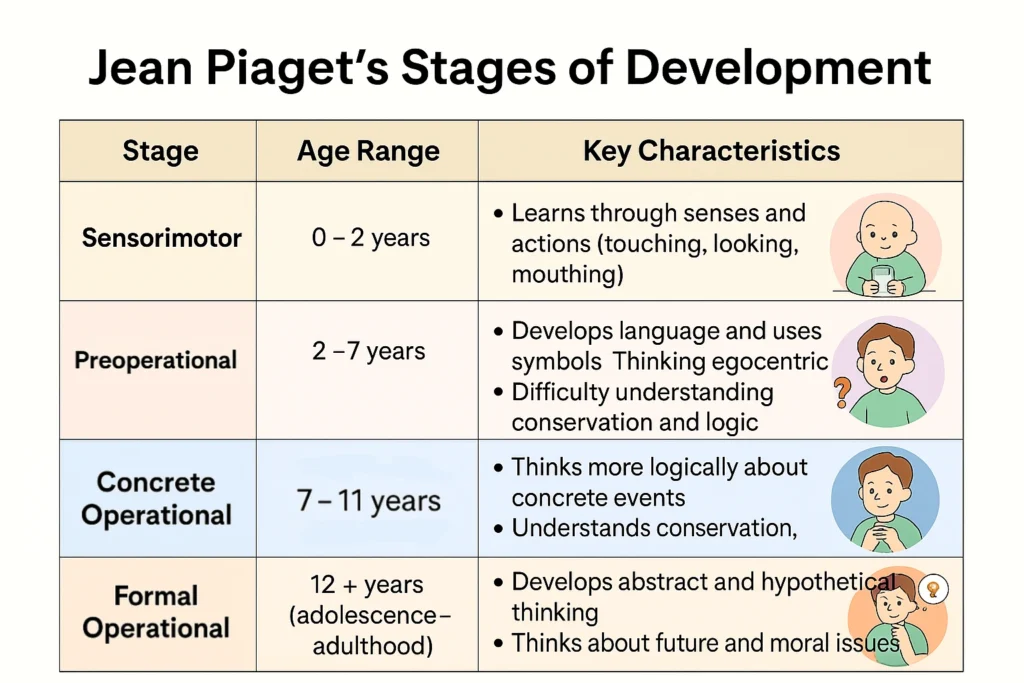
Understanding how children think is one of the most powerful tools for parenting and education. Jean Piaget, a pioneer in developmental psychology, proposed that children move through four stages of cognitive development, each marked by distinct ways of thinking and understanding the world.
Piaget emphasized that children are active learners, constructing knowledge through interaction with their environment (Piaget, 1952). These stages are sequential, meaning each stage builds upon the previous one.
Stage 1: Sensorimotor Stage (Birth to 2 Years)
What Happens in This Stage
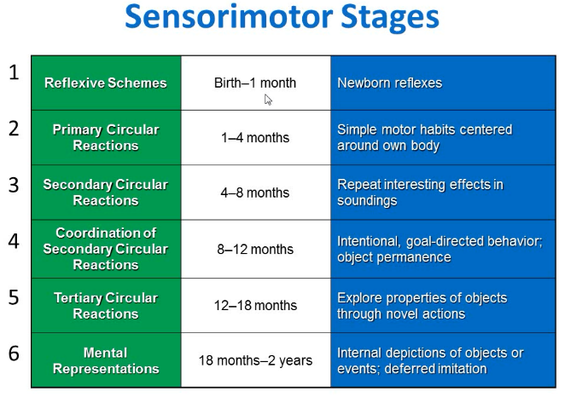
In the sensorimotor stage, infants learn through sensory experiences and physical actions. They explore the world by touching, seeing, hearing, and moving.
A major milestone in this stage is object permanence—the understanding that objects continue to exist even when they are not visible.
Key Characteristics
- Learning through senses and movement
- Development of object permanence
- Beginning of intentional actions
- Early memory development
Parent Guide
Parents should focus on interaction and stimulation. Talking, playing, and responding to the child’s actions are essential for brain development.
Consistent emotional bonding also supports cognitive and emotional growth.
Activities at Home
- Peek-a-boo games
- Sensory toys (soft, colorful, textured)
- Mirror play
- Simple cause-and-effect toys
When to Worry?
- No response to sounds or visual stimuli
- Lack of eye contact
- No attempt to explore surroundings
- Delayed motor development
Early concerns may require evaluation for developmental delays or conditions such as Autism Spectrum Disorder.
Stage 2: Preoperational Stage (2 to 7 Years)
What Happens in This Stage
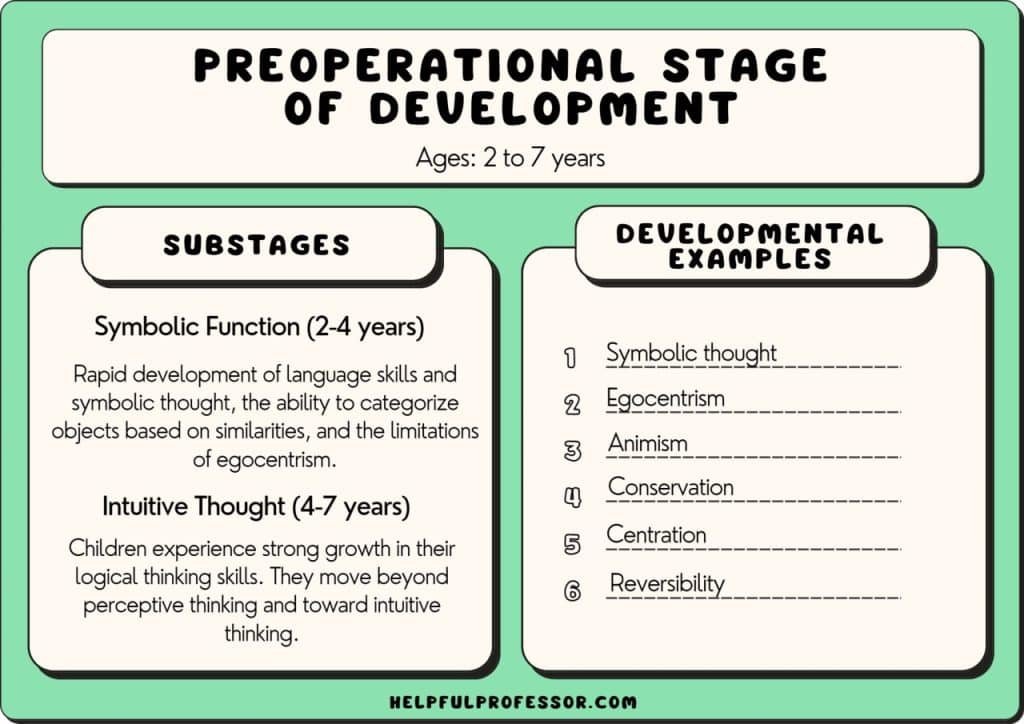
Children begin to use language, symbols, and imagination. However, their thinking is still egocentric, meaning they struggle to see perspectives other than their own.
They also show animism, believing that objects have feelings or intentions.
Key Characteristics
- Rapid language development
- Symbolic thinking (pretend play)
- Egocentrism
- Difficulty understanding logic
Parent Guide
Encourage communication and imagination. Parents should engage in conversations, storytelling, and play-based learning.
Avoid expecting logical reasoning beyond their developmental level.
Activities
- Pretend play (role-playing games)
- Storytelling and reading
- Drawing and creative activities
- Simple puzzles
When to Worry?
- Limited or no speech development
- Difficulty understanding simple instructions
- Lack of social interaction
- No engagement in pretend play
Persistent issues may require assessment by a developmental specialist.
Stage 3: Concrete Operational Stage (7 to 11 Years)
What Happens in This Stage
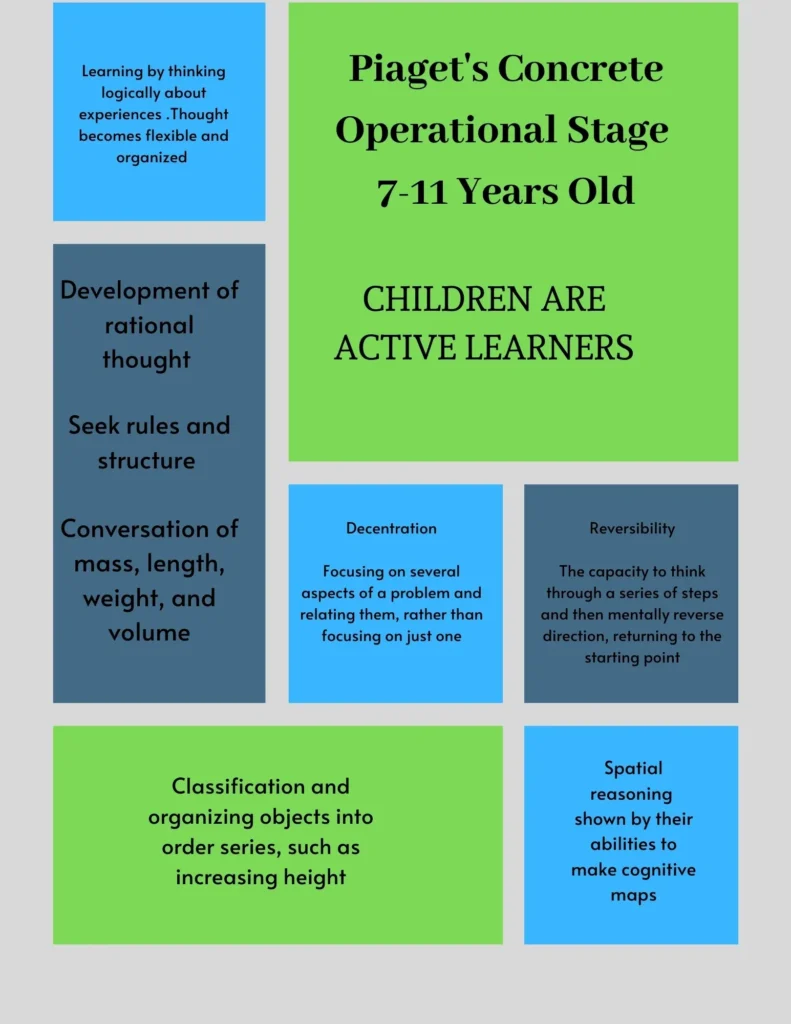
Children begin to think logically about concrete events. They understand concepts such as conservation (quantity remains the same despite changes in shape) and can solve problems more systematically.
Key Characteristics
- Logical thinking about real situations
- Understanding of conservation
- Improved problem-solving
- Reduced egocentrism
Parent Guide
Support learning through real-life examples and hands-on experiences. Encourage questioning and problem-solving.
This is a critical stage for building academic confidence.
Activities
- Math games and puzzles
- Science experiments
- Group activities and teamwork
- Strategy-based games
When to Worry
- Difficulty understanding basic concepts
- Struggles with attention or learning
- Social withdrawal or peer conflict
- Low confidence in school tasks
Concerns may relate to learning difficulties or attention-related issues.
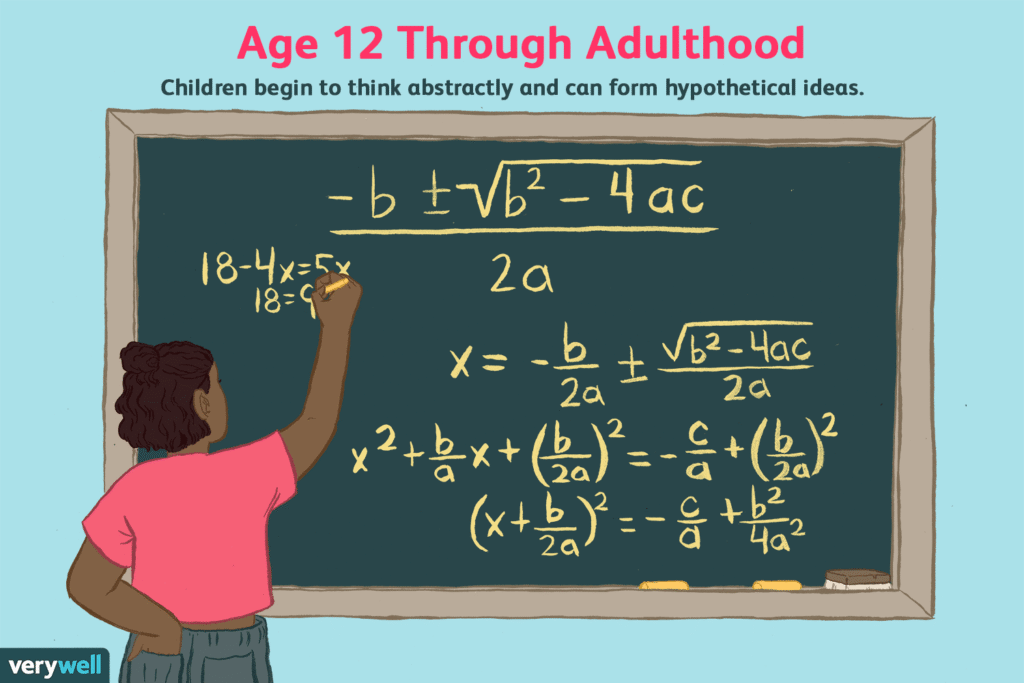
Stage 4: Formal Operational Stage (12 Years and Above)
What Happens in This Stage
Adolescents develop abstract thinking and reasoning. They can think about hypothetical situations, plan for the future, and analyze complex ideas.
Key Characteristics
- Abstract and logical thinking
- Hypothetical reasoning
- Problem-solving skills
- Identity exploration
Parent Guide
Encourage independent thinking and decision-making. Engage in discussions about ideas, values, and future goals.
Respect autonomy while providing guidance.
Activities
- Debates and discussions
- Problem-solving challenges
- Goal-setting exercises
- Critical thinking tasks
When to Worry
- Persistent difficulty in reasoning or decision-making
- Emotional instability affecting daily life
- Risk-taking behavior without awareness of consequences
- Social or academic withdrawal
Professional guidance may be needed if issues interfere with functioning.
Why Piaget’s Theory Still Matters
Piaget’s theory provides a structured way to understand how children think at different ages. It helps parents set realistic expectations and respond appropriately.
Although modern research has expanded on his work, the core idea remains influential: children learn best when experiences match their developmental stage.
Final Thoughts
Every child develops at their own pace, but understanding developmental stages helps parents provide the right support at the right time.
Instead of expecting children to think like adults, recognizing their stage allows for better communication, effective teaching, and healthier development.
REFERENCES (APA 7)
- Piaget, J. (1952). The origins of intelligence in children. International Universities Press.
- Piaget, J. (1964). Development and learning. Journal of Research in Science Teaching.
- American Psychiatric Association. (2013). Diagnostic and statistical manual of mental disorders (5th ed.).