Posted on Leave a comment

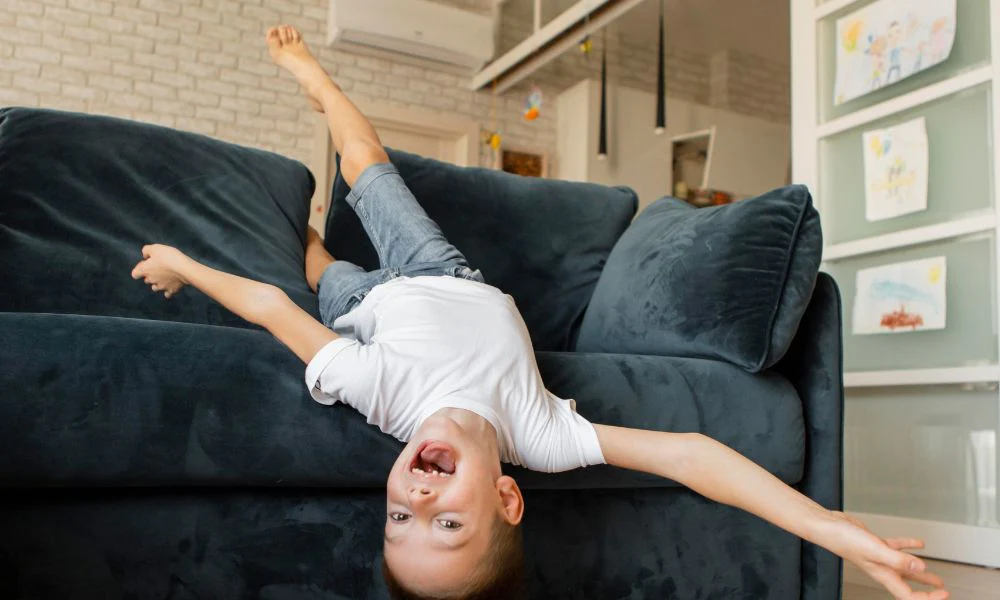
Aggression in Children

Aggression in Children: What It Means and How to Respond

It often begins suddenly.

A toy is taken away, and the child hits.
A simple “no” turns into shouting.
A small frustration becomes a big reaction.

Parents feel confused and sometimes overwhelmed.
“Why is my child behaving like this?”

Aggression in children is not always about anger or disobedience. It is often a signal—a child struggling to express, control, or communicate something deeper.

What Is Aggression in Children?

Aggression refers to behaviors intended to hurt, control, or express frustration, either physically or verbally.

It may include:

  • Hitting, kicking, biting
  • Yelling or insulting
  • Throwing objects
  • Defiance and hostility

In early development, some level of aggression is normal. The concern begins when it becomes frequent, intense, or harmful.

Research shows that children use aggression when they lack emotional regulation or communication skills (Tremblay, 2000).

Why Do Children Become Aggressive?

Aggression does not come from one cause. It develops through a combination of emotional, environmental, and developmental factors.

Emotional Factors

Children who cannot express feelings like anger, frustration, or fear may act them out physically.

Developmental Factors

Young children naturally struggle with impulse control. Their brains are still developing the ability to regulate behavior.

Environmental Factors

Exposure to conflict, inconsistent discipline, or harsh parenting can increase aggressive responses.

According to Albert Bandura, children learn aggressive behavior by observing and imitating others (Bandura, 1977).

Aggression by Age: What Changes Over Time

Toddlers (2–4 Years)

At this stage, aggression is often impulsive.

Common Behaviors

  • Hitting or biting
  • Throwing objects
  • Tantrums

Why It Happens

Limited language skills and poor emotional control.

Parent Response

Stay calm, set clear limits, and teach simple words for feelings.

Early Childhood (4–7 Years)

Children begin to understand rules but still struggle with control.

Common Behaviors

  • Verbal aggression
  • Defiance
  • Frustration during play

Why It Happens

Developing independence and emotional expression.

Parent Response

Teach problem-solving and reinforce positive behavior.

Middle Childhood (7–11 Years)

Aggression becomes more controlled but may still appear in social situations.

Common Behaviors

  • Bullying or teasing
  • Anger during competition
  • Resistance to authority

Why It Happens

Peer pressure and self-esteem issues.

Parent Response

Encourage empathy, communication, and emotional awareness.

Adolescence and Teenage Years (12–18 Years)

Aggression may become more complex.

Common Behaviors

  • Verbal conflict
  • Risk-taking behavior
  • Emotional outbursts

Why It Happens

Identity struggles and emotional intensity.

According to Erik Erikson, adolescence involves identity formation, which can increase emotional conflict (Erikson, 1968).

Parent Response

Maintain communication, respect independence, and set boundaries.

Aggression in Children with Autism

Aggression in children with Autism Spectrum Disorder requires a different understanding.

It is often not intentional harm but a response to overwhelming situations.

Common Triggers

  • Sensory overload (noise, light, touch)
  • Difficulty communicating needs
  • Changes in routine
  • Anxiety or frustration

How It Appears

  • Sudden meltdowns
  • Self-injury
  • Repetitive aggressive behavior

Research shows that communication difficulties and sensory sensitivities significantly increase behavioral challenges in autism (Matson & Rivet, 2008).

Parent and Caregiver Response

Focus on identifying triggers rather than punishing behavior. Use structured routines, visual supports, and calm environments.

Professional support such as behavioral therapy and occupational therapy is often beneficial.

How to Reduce Aggression in Children

Aggression cannot be eliminated instantly, but it can be reduced through consistent strategies.

Start by understanding the cause. Behavior is a signal, not just a problem.

Teach children how to express emotions using words. Encourage phrases like “I am angry” instead of physical reactions.

Set clear and consistent boundaries. Children need to know what is acceptable.

Reinforce positive behavior. Attention to good behavior reduces negative behavior.

What Parents Should Do in the Moment

When aggression happens, stay calm.

Reacting with anger often increases aggression. Instead, use a firm but calm tone.

Remove the child from the situation if necessary. Help them calm down before discussing behavior.

Focus on teaching, not punishing.

When to Seek Professional Help

Professional support is recommended if:

  • Aggression is frequent and severe
  • The child harms themselves or others
  • Behavior does not improve with guidance
  • There are signs of developmental or emotional disorders
  • Aggression interferes with school or relationships

Early intervention improves long-term outcomes.

Top 10 Parenting Tips

  1. Stay calm during aggressive behavior
  2. Teach emotional expression
  3. Set clear and consistent rules
  4. Reinforce positive behavior
  5. Avoid harsh punishment
  6. Identify triggers
  7. Encourage problem-solving
  8. Limit exposure to aggressive environments
  9. Maintain routines
  10. Seek help when needed

Final Thought

Aggression is not just a problem to stop—it is a message to understand.

When children learn to express emotions safely, aggression decreases naturally.

The goal is not control, but guidance.

Because every child who learns to manage anger learns a skill for life.

REFERENCES (APA 7)

  • Bandura, A. (1977). Social learning theory. Prentice Hall.
  • Erikson, E. H. (1968). Identity: Youth and crisis. Norton.
  • Matson, J. L., & Rivet, T. T. (2008). Characteristics of challenging behaviors in autism. Research in Autism Spectrum Disorders.
  • Tremblay, R. E. (2000). The development of aggressive behaviour. International Journal of Behavioral Development.

Posted on Leave a comment

Emotional Development Stages in Children

Emotional Development

Emotional development is the beginning of a child’s experience, understanding, expression, and management of emotions from birth to late adolescence. It also includes how growth and changes in these processes related to emotions take place. Children having well-developed social-emotional skills are also able to:

  • Express their ideas and feelings
  • Show empathy towards others
  • Manage their feelings of frustration and displeasure more easily
  • Feel self-confident
  • More easily make and develop friendships’
  • Succeed in school

Social-emotional development provides the basis for how we feel about ourselves and how we experience others. This foundation starts from the day we are born and continues to develop throughout our lifespan. Positive and nurturing early experiences and relationships have a significant impact on a child’s socialemotional development. They also influence how the young child’s brain develops. They have a long-lasting influence on how the child feels about himself, how he thinks and interacts with his world, and what does he expect from others. Emotional development involves:

  • Understanding how and why emotions appear
  • Recognizing one’s own feelings and those of others, and
  • Developing effective ways of managing them.
  • As children grow and are open to different situations their emotional lives also become more complex.
  • Developing skills for managing a variety of emotions is therefore very important for their emotional health.

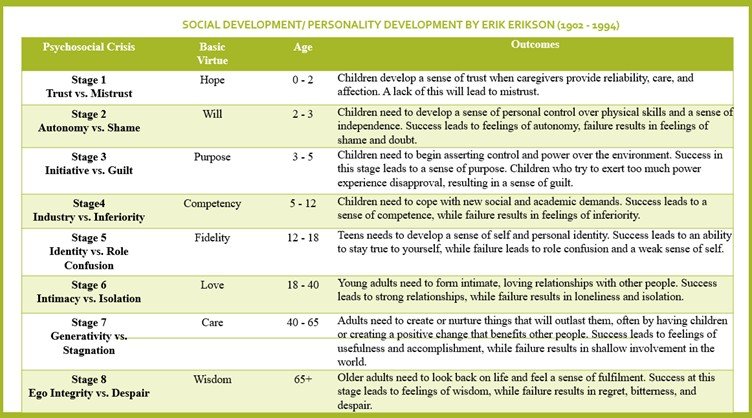
Erik Erikson’s Theory of Socio-Emotional Development

Cognitive, behavioral and social developments work together with emotional development. In this process context also play a role. Various emotional development theories are offered, but there is general agreement on age-related milestones in emotional development.

  1. Trust vs. Mistrust
  2. Autonomy vs. Shame/Doubt
  3. Initiative vs. Guilt
  4. Industry vs. Inferiority
  5. Identity vs. Role Confusion
  6. Intimacy vs. Isolation
  7. Generativity vs. Stagnation
  8. Ego Integrity vs. Despair

Emotional Development Stages in Children: Understanding What Your Child Feels

A toddler cries when you leave the room.
A child becomes upset over a small mistake.
A teenager suddenly withdraws and says, “You don’t understand.”

Different ages. Different reactions. But all connected by one thing—emotional development.

Children are not born knowing how to manage emotions. They learn it slowly, step by step, through experience, relationships, and guidance.

Understanding emotional development stages helps parents respond with awareness instead of confusion.

What Is Emotional Development?

Emotional development refers to how children learn to identify, express, and regulate emotions, and how they build relationships with others.

It includes:

  • Recognizing feelings
  • Expressing emotions appropriately
  • Managing emotional reactions
  • Understanding others’ emotions

According to Erik Erikson, emotional growth is closely linked to social experiences, where each stage of life presents emotional challenges that shape personality (Erikson, 1950).

Why Emotional Development Matters

A child who understands emotions is more likely to:

  • Build healthy relationships
  • Manage stress effectively
  • Perform better academically
  • Develop strong self-esteem

Research shows that early emotional development is strongly linked to long-term mental health outcomes (Shonkoff & Phillips, 2000).

Stage 1: Infancy (0–2 Years) – Trust and Emotional Bonding

At this stage, emotions are simple but powerful.

Babies express feelings through crying, smiling, and body language. They rely completely on caregivers to regulate their emotions.

Key Characteristics

  • Attachment to caregivers
  • Basic emotions (joy, fear, distress)
  • Beginning of emotional trust

Parent Role

Respond consistently to needs. Comfort, touch, and attention help build emotional security.

When to Worry

  • Lack of eye contact
  • Limited emotional response
  • No attachment behavior

Stage 2: Toddlerhood (2–4 Years) – Emotional Expression and Control

Toddlers begin to express emotions more clearly—but cannot yet control them.

This is why tantrums are common.

Key Characteristics

  • Strong emotional reactions
  • Difficulty controlling impulses
  • Beginning of self-awareness

Parent Role

Stay calm and help label emotions (“You are upset”). Teach simple coping skills.

When to Worry

  • Extreme aggression
  • No emotional expression
  • Persistent inability to calm down

Stage 3: Early Childhood (4–7 Years) – Understanding Emotions

Children begin to understand that emotions have causes.

They start recognizing others’ feelings and develop empathy.

Key Characteristics

  • Emotional awareness
  • Imagination influencing emotions
  • Beginning empathy

Parent Role

Encourage discussion about feelings. Use stories and examples to teach emotional understanding.

When to Worry

  • Lack of empathy
  • Frequent fear or anxiety
  • Difficulty interacting socially

Stage 4: Middle Childhood (7–11 Years) – Emotional Regulation

At this stage, children improve their ability to control emotions.

They begin to think before reacting.

Key Characteristics

  • Better emotional control
  • Understanding social rules
  • Sensitivity to peer opinions

Parent Role

Teach problem-solving and coping strategies. Support confidence and social skills.

When to Worry

  • Frequent emotional outbursts
  • Low self-esteem
  • Social withdrawal

Stage 5: Adolescence (12–18 Years) – Emotional Complexity

Emotions become more intense and complex.

Teenagers experience mood swings, identity struggles, and heightened sensitivity.

Key Characteristics

  • Strong emotional experiences
  • Identity development
  • Increased independence

According to Jean Piaget, adolescents develop abstract thinking, which allows them to reflect deeply on emotions (Piaget, 1952).

Parent Role

Provide support without control. Listen more than you speak.

When to Worry

  • Persistent sadness or anger
  • Risky behavior
  • Withdrawal from family or friends

How Emotional Development Happens

Children learn emotions through:

  • Relationships with caregivers
  • Observation of others
  • Social experiences
  • Brain development

According to Albert Bandura, children learn emotional responses by observing and imitating others (Bandura, 1977).

How to Support Healthy Emotional Development

Parents play the most important role in shaping emotional growth.

Create a safe emotional environment where children feel heard and accepted. Teach them to name their emotions. Model calm behavior during stressful situations.

Encourage problem-solving instead of reacting impulsively.

Top 10 Parenting Tips

  1. Acknowledge your child’s feelings
  2. Teach emotional vocabulary
  3. Stay calm during emotional outbursts
  4. Model emotional control
  5. Encourage open communication
  6. Avoid dismissing emotions
  7. Help children solve problems
  8. Maintain consistent routines
  9. Provide emotional security
  10. Seek help when needed

When to Seek Professional Help

Consider consulting a specialist if:

  • Emotional reactions are extreme or persistent
  • The child struggles to function daily
  • There are signs of anxiety or depression
  • Social relationships are severely affected

Early intervention supports healthier emotional development.

Final Thought

Emotional development is not about eliminating emotions—it is about understanding and managing them.

Children do not need perfect parents. They need parents who listen, guide, and support them through every emotional stage.

Because every emotion a child learns to understand becomes a strength for life.

REFERENCES (APA 7)

  • Erikson, E. H. (1950). Childhood and society. Norton.
  • Piaget, J. (1952). The origins of intelligence in children. International Universities Press.
  • Bandura, A. (1977). Social learning theory. Prentice Hall.
  • Shonkoff, J. P., & Phillips, D. A. (2000). From neurons to neighborhoods. National Academy Press.


Posted on Leave a comment

Building Confidence in Kids

Building Confidence in Kids: A Story Every Parent Recognizes

A child stands at the edge of the classroom.

The teacher asks a question. The child knows the answer—but stays silent.

At home, the same child avoids trying new things:
“I can’t do it.”
“I’m not good at this.”

Parents often wonder why their child is not confident.

But confidence is not something children are born with. It is something they build slowly through experience.

What Is Confidence in Children?

Confidence is a child’s belief that “I can try, I can learn, and I can improve.”

It is not about being perfect. It is about feeling capable even when things are difficult.

Psychologically, confidence is closely linked to self-efficacy, a concept developed by Albert Bandura in social learning theory, which explains that children build belief in themselves through successful experiences and supportive feedback (Bandura, 1977).

Why Some Children Lack Confidence

Confidence is shaped by environment, not genetics alone.

Children may struggle with confidence due to frequent criticism, overprotection by parents, fear of failure, comparison with others, or lack of opportunities to try.

When children are not allowed to fail safely, they learn to avoid challenges instead of facing them.

How Confidence Develops Over Time

Confidence develops gradually through small experiences of success and support.

A child who learns to tie shoelaces feels capable.
A child who is praised for effort learns persistence.
A child who is allowed to try and fail learns resilience.

According to Jean Piaget, children construct understanding through interaction with their environment, meaning confidence grows through active participation, not passive instruction (Piaget, 1952).

Early Childhood: Building the Foundation of Confidence

At a young age, children look to adults for emotional signals.

What builds confidence here includes encouragement, safe exploration, simple choices, and positive attention.

Parent role is to guide children to try rather than doing everything for them. A child who is allowed to struggle safely develops early independence.

Middle Childhood: Confidence Through Achievement

At this stage, children begin comparing themselves with peers.

What builds confidence includes academic success, skill development, recognition of effort, and social acceptance.

Parent role is to focus on effort, not just results. A child praised for effort learns that trying matters more than being perfect.

Adolescence: Confidence and Identity

Teenagers are not just building confidence—they are building identity.

They begin to ask who they are, what they are good at, and where they belong.

According to Erik Erikson, adolescence is a stage of identity formation, where support and acceptance shape long-term self-esteem (Erikson, 1968).

How to Build Confidence in Kids

Confidence is built through action, not words alone.

Allow children to try things on their own even if they fail. Let them solve small problems instead of solving everything for them. Encourage effort instead of perfection.

A child who hears “you worked hard” develops stronger resilience than one praised only for results.

The Power of Small Wins

Confidence grows in small moments such as completing homework alone, speaking in front of others, trying a new activity, or making a mistake and trying again.

Each small success becomes evidence: “I can do this.”

What Damages Confidence in Children

Certain parenting patterns unintentionally reduce confidence, including constant criticism, comparing children with others, overprotection, doing everything for the child, and ignoring emotional effort.

When children feel they are never enough, they stop trying.

Activities That Build Confidence

Activities that support confidence include role-play games, decision-making exercises, sports, creative arts, problem-solving games, and responsibility tasks at home.

These activities help children experience capability in real situations.

Emotional Safety: The Hidden Key

Children take risks only when they feel emotionally safe.

A child who fears punishment will avoid trying. A child who feels supported will explore.

According to Bandura’s social learning theory, behavior is shaped by reinforcement and observation, meaning supportive environments directly strengthen confidence (Bandura, 1977).

Top 10 Parenting Tips for Building Confidence

  1. Praise effort, not just success
  2. Let children make small decisions
  3. Allow safe failure
  4. Avoid comparisons
  5. Encourage independence
  6. Teach problem-solving skills
  7. Give responsibilities at home
  8. Stay emotionally supportive
  9. Avoid overprotection
  10. Be a role model of confidence

Final Thought

Confidence is not built in one day.

It grows in moments when a child tries, fails, tries again, and is still supported.

The most confident children are not those who never struggle. They are those who learned that struggle is part of learning.

And that belief is built at home.

REFERENCES (APA 7)

Bandura, A. (1977). Social learning theory. Prentice Hall.
Piaget, J. (1952). The origins of intelligence in children. International Universities Press.
Erikson, E. H. (1968). Identity: Youth and crisis. Norton.
Schunk, D. H., & Meece, J. L. (2006). Self-efficacy development in adolescence. Educational Psychology.

Posted on Leave a comment

Anxiety in Kids: Parental Guide

Anxiety in children is far more common—and far more overlooked—than many parents realize. A report highlighted by The New York Times (2018) revealed that anxiety disorders are among the most prevalent mental health concerns in children and adolescents, yet a large number of affected children never receive proper treatment. This is not due to a lack of effective interventions; rather, anxiety often remains unnoticed because it does not always present with obvious or disruptive behavior.

Unlike conditions that demand immediate attention, anxiety can be quiet. Some children become withdrawn, overly compliant, or inhibited, making their distress easy to miss. In other cases, anxiety may appear as irritability or resistance and is mistakenly interpreted as oppositional behavior. This variability in presentation makes accurate identification more complex.

Adults may also misinterpret anxiety as a temporary developmental phase. While it is true that certain forms of anxiety—such as separation anxiety—are normal and even protective in early childhood, problems arise when fear and worry begin to interfere with a child’s daily functioning, relationships, or enjoyment of life. At that point, anxiety is no longer adaptive; it becomes a barrier that requires attention.

Despite this, many parents adopt a “wait and see” approach, assuming the child will outgrow the problem. Research suggests that, on average, there is approximately a two-year delay between the onset of anxiety symptoms and the initiation of treatment. During this time, untreated anxiety can affect emotional regulation and cognitive functioning. As noted by clinicians at the Child Mind Institute, prolonged anxiety may disrupt normal developmental processes, reinforcing maladaptive patterns of fear and avoidance.

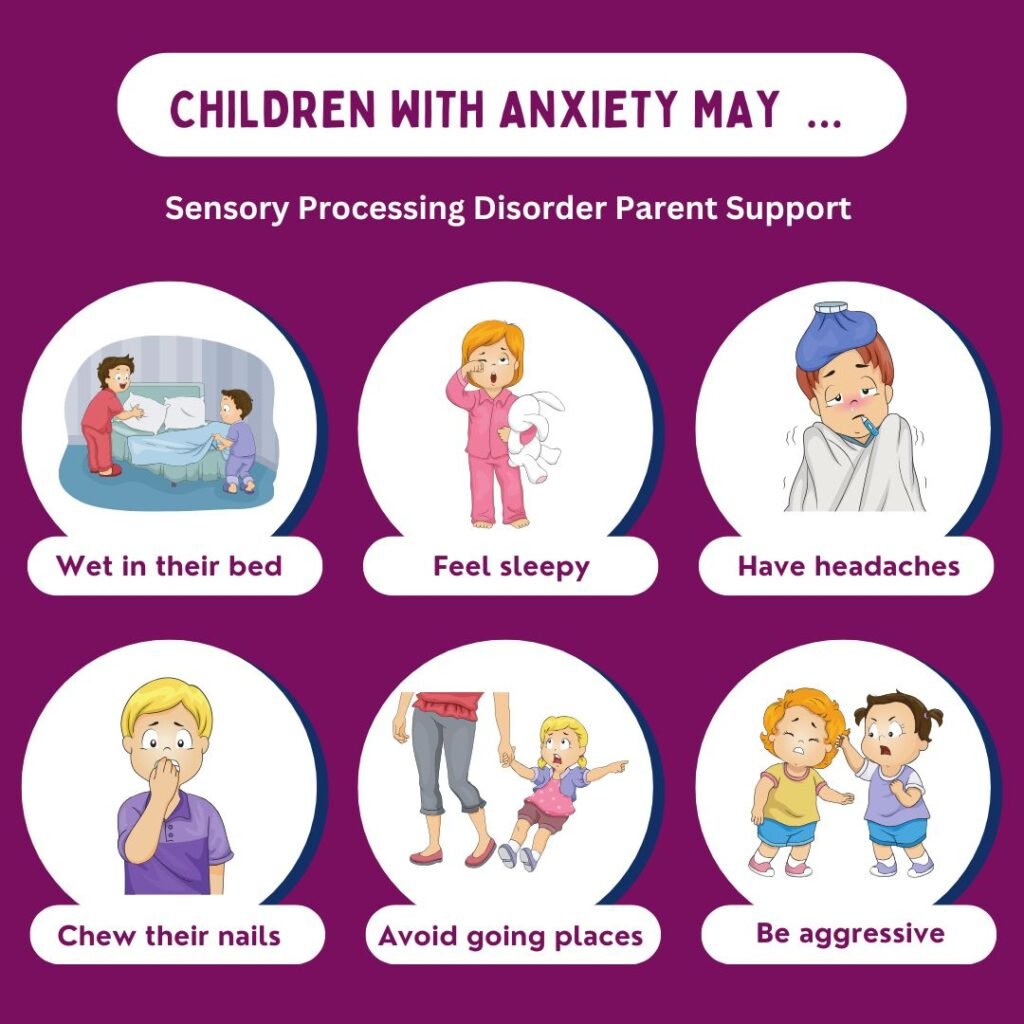
Anxiety also does not always appear as emotional distress alone. It frequently manifests through physical symptoms such as headaches, stomachaches, or fatigue—especially in situations linked to school or social environments. These somatic complaints can be understood as indirect expressions of internal distress, reflecting the child’s limited ability to verbalize anxiety.

Importantly, the role of parents is central in both the development and management of anxiety. In early childhood, it is natural for parents to operate in a protective “fix-it mode,” preventing harm and solving problems before they arise. However, when this approach continues into later childhood—particularly in response to anxiety—it can unintentionally reinforce avoidance behaviors. Children may come to rely on parents to remove discomfort rather than learning how to tolerate and manage it.

Effective treatment, therefore, often involves both the child and the parent. Evidence-based approaches typically include gradual exposure to feared situations, combined with strategies that help children regulate their emotional responses. Through this process, children learn that anxiety, while uncomfortable, is manageable. As clinicians emphasize, the goal is not to eliminate anxiety entirely but to help children develop resilience and coping skills.

Early recognition remains critical. Parents are encouraged to seek guidance if they notice persistent distress, avoidance behaviors, or difficulties in daily functioning. Even subtle signs—such as a child being unable to sleep alone, refusing separation from caregivers, or repeatedly seeking reassurance—may indicate underlying anxiety. Consulting with educators, pediatricians, or mental health professionals can provide clarity and direction.

Ultimately, addressing anxiety requires both awareness and action. With timely intervention, appropriate support, and informed parenting, children can learn not only to cope with anxiety but to grow through it.

Signs of Anxiety in Children: What Every Parent Should Notice

It often starts quietly.

A child who once ran into school now holds your hand tightly.
A child who slept peacefully now wakes up at night.
A simple “What’s wrong?” is met with “Nothing.”

But something has changed.

This is how anxiety in children often appears—not loudly, but gradually.

What Is Anxiety in Children?

Anxiety is a persistent feeling of worry, fear, or unease that goes beyond normal reactions and begins to affect a child’s daily life.

Unlike temporary fear, anxiety tends to stay, repeat, and grow over time.

According to the American Psychiatric Association, anxiety becomes clinically significant when it interferes with functioning and is disproportionate to the situation (APA, 2013).

Understanding the Differences: Anxiety vs Fear vs Stress vs Restlessness

Parents often confuse these terms, but each has a different meaning.

Fear

Fear is immediate and specific. A child sees a dog and feels scared. When the threat disappears, fear goes away.

Anxiety

Anxiety is future-oriented. The child worries about what might happen, even when there is no immediate danger.

Stress

Stress is a response to pressure or demand, such as exams or changes in routine. It may be temporary.

Restlessness

Restlessness is physical or mental unease, often linked to excess energy or difficulty focusing. It may not always involve worry.

Understanding these differences helps parents respond correctly rather than mislabeling behavior.

Common Signs of Anxiety in Children

Anxiety does not always look like worry. It often appears through behavior and physical symptoms.

Emotional Signs

  • Excessive worrying
  • Irritability
  • Fear of separation
  • Avoidance of situations

Physical Signs

  • Stomach aches or headaches
  • Sleep problems
  • Fatigue
  • Rapid heartbeat

Behavioral Signs

  • Clinginess
  • Refusal to attend school
  • Difficulty concentrating
  • Withdrawal from activities

These symptoms may come and go, but persistent patterns need attention.

Anxiety by Age: What Causes It?

Anxiety changes as children grow. Understanding age-specific causes is essential.

Toddlers (1–3 Years)

Possible Causes

  • Separation from caregivers
  • New environments
  • Loud or unfamiliar stimuli

At this stage, anxiety is often linked to attachment and security.

Early Childhood (4–7 Years)

Possible Causes

  • Fear of the dark or imaginary threats
  • Changes in routine
  • Starting school

Children begin to imagine possibilities, which can increase fear.

Middle Childhood (7–11 Years)

Possible Causes

  • Academic pressure
  • Peer relationships
  • Fear of failure

Children become more aware of expectations and social comparison.

Adolescence and Teenage Years (12–18 Years)

Possible Causes

  • Identity and self-image
  • Peer pressure
  • Future uncertainty

According to Erik Erikson, this stage involves identity formation, which can increase emotional stress (Erikson, 1968).

Anxiety in Children with Autism

Anxiety is particularly common in children with Autism Spectrum Disorder.

However, it may not always look typical.

How Anxiety Appears in Autism

  • Increased repetitive behaviors
  • Meltdowns instead of verbal expression
  • Sensory overload reactions
  • Resistance to change

Research indicates that difficulty in communication and sensory processing can increase anxiety levels in autistic children (White et al., 2009).

Recognizing these differences is crucial for accurate support.

How to Reduce Anxiety in Children

Anxiety cannot be removed instantly, but it can be managed effectively.

Start with emotional safety. Children need to feel heard before they can feel calm.

Create predictable routines. Structure reduces uncertainty, which reduces anxiety.

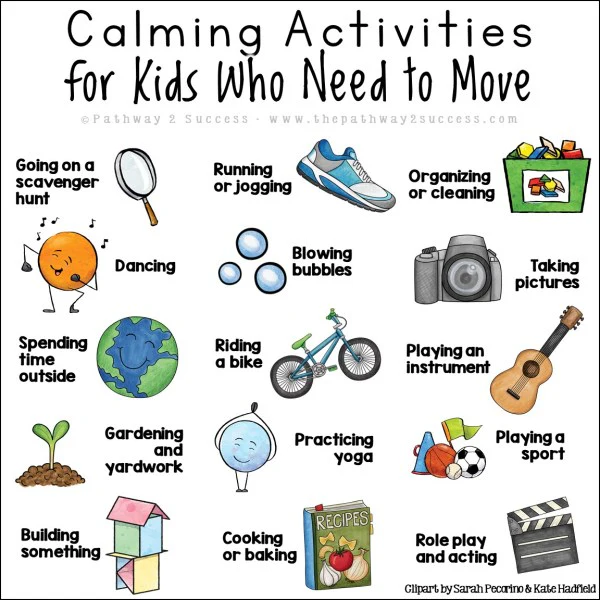
Teach simple coping strategies such as deep breathing or calming activities.

Gradual exposure to fears helps children build confidence instead of avoidance.

The Role of Parenting

Children learn how to respond to stress by watching adults.

According to Albert Bandura, children model behavior they observe (Bandura, 1977).

When parents remain calm and supportive, children learn regulation.

When to Seek Professional Help

Parents should consult a specialist if:

  • Anxiety interferes with daily activities
  • The child avoids school or social interaction
  • Physical symptoms persist without medical cause
  • Anxiety is intense or worsening
  • There are panic-like reactions or extreme fear

Early intervention improves outcomes and prevents long-term difficulties.

Top 10 Parenting Tips to Support Anxious Children

  1. Listen without judgment
  2. Validate feelings (“I understand you feel worried”)
  3. Maintain consistent routines
  4. Avoid dismissing fears
  5. Encourage gradual exposure
  6. Teach calming techniques
  7. Limit over-reassurance
  8. Model calm behavior
  9. Support healthy sleep habits
  10. Seek help when needed

🔷 Final Thought

Anxiety in children is not always visible—but it is always meaningful.

It is not simply fear. It is a signal that something feels uncertain, overwhelming, or unsafe.

When parents respond with patience and understanding, children learn not to avoid fear—but to face it with confidence.

REFERENCES (APA 7)

  • American Psychiatric Association. (2013). Diagnostic and statistical manual of mental disorders (5th ed.).
  • Bandura, A. (1977). Social learning theory. Prentice Hall.
  • Child Mind Institute. (2018). Children’s mental health report: Anxiety disorders.
  • Erikson, E. H. (1968). Identity: Youth and crisis. Norton.
  • The New York Times. (2018). Anxiety disorders in children often go untreated.
  • White, S. W., Oswald, D., Ollendick, T., & Scahill, L. (2009). Anxiety in children with autism spectrum disorders. Clinical Psychology Review.
Posted on Leave a comment

Parenting Styles and children’s Behavior

Parenting Styles and Child Behavior: The Story Behind Every Reaction

Two children spill milk at the table.

In one home, the parent shouts, “Why are you always careless?”
In another, the parent says calmly, “Let’s clean this together.”

Same mistake. Different response.
And over time, very different children.

This is where parenting styles quietly shape behavior—not in one moment, but across hundreds of small interactions.

  • Family is rooted in society as the fundamental element of social lives. A balanced family relationship influences every individual in society. Family structure is controlled and monitored by the parents. Parents, directly and indirectly, affect the physical and psychological health of children (Zheng et al., 2022).
  • Different parents have different ideologies, behaviour, interest, attitude, and styles to serve their children. They have multiple purposes to raise their children accordingly.
  • Baumrind and Black (1967) defined the first three parenting styles as authoritative, authoritarian, and permissive.
  • At school-going age, children fulfill their expectations through educational achievements. In between parenting styles and children, the effect ultimately diverts towards educational achievement.

What Are Parenting Styles?

Parenting style is not about a single decision. It is the overall emotional climate and approach a parent uses when raising a child—how rules are set, how emotions are handled, and how communication happens.

The concept was systematically described by Diana Baumrind, who identified major parenting styles based on levels of control and warmth (Baumrind, 1967).

These styles influence how children behave, think, and relate to others.

Why Parenting Style Matters

Children are not just told how to behave—they learn behavior through experience.

According to Albert Bandura, children observe, imitate, and internalize the behavior of adults around them (Bandura, 1977).

This means parenting style becomes the blueprint for:

  • Emotional regulation
  • Social behavior
  • Confidence and self-esteem
  • Discipline and responsibility

The Four Main Parenting Styles

  1. Authoritative Parenting: Firm but Warm

A child breaks a toy. The parent says,
“I understand you’re upset, but we need to take care of things.”

This style balances clear rules with emotional support.

  • The authoritative parenting style is defined by high expectations and rapid response. These parents set high standards for their children but also lavish them with love and support.
  • This parenting style emphasizes striking a balance between responsiveness and expectations, as well as guiding children in a logical, issue-oriented, and disciplined manner by explaining the rationale behind rules. This product excels at meeting the needs of each of the four areas of family life.
  • This parenting style is characterized by high-quality parental characteristics such as strong emotional attachment and support for children.

Key Characteristics

  • High warmth
  • Clear boundaries
  • Open communication
  • Encouragement of independence

Impact on Children

Children raised this way tend to be:

  • Confident
  • Responsible
  • Emotionally balanced
  • Socially competent

Research consistently identifies this as the most effective parenting style for healthy development (Baumrind, 1991).

  1. Authoritarian Parenting: Strict and Controlling

A child makes a mistake. The response is immediate:
“Because I said so.”

This style emphasizes obedience over understanding.

  • Authoritarian parents are obnoxious and inattentive. These parents are called controlling and do not support their children daily (Baumrind, 1991).
  • A style of parenting in which children are raised in an unduly restrictive and demanding environment. There is a lack of nurturing and two-way communication between parents and children, despite the high demands for control and maturity. Restricting their children’s freedom, authoritarian parents impose strict restrictions and demands on their children and threaten severe punishment if they do not.
  • Authoritarian parenting is an extremely strict parenting style. It places high expectations on children with little responsiveness. As an authoritarian parent, you focus more on obedience, discipline, control rather than nurturing your child.

Key Characteristics

  • High control
  • Low emotional warmth
  • Strict rules
  • Limited communication

Impact on Children

Children may become:

  • Obedient but anxious
  • Fearful of mistakes
  • Less confident
  • More likely to hide behavior

Fear may produce short-term discipline but often weakens long-term emotional development.

  1. Permissive Parenting: Warm but Without Limits

A child refuses to follow rules. The parent gives in:
“Okay, do what you want.”

This style prioritizes freedom over structure.

  • Permissive parents are less demanding and more responsive, and as a result, they do not set high expectations for their children, but instead demonstrate their love and support.
  • Permissive parents place minimal emphasis on their children’s development of self-control and instead emphasize their children’s sense of self-reliance. Children whose parents are excessively lenient have lower levels of self-reliance, goal orientation, and self-control.
  • This is the parent who is afraid to set limits on children or believes a child has to be true to his or her own nature. Permissive parents are not demanding. Kids do not have many responsibilities and are allowed to regulate their behavior and the majority of their choices

Key Characteristics

  • High warmth
  • Low control
  • Few rules
  • Avoidance of conflict

Impact on Children

Children may become:

  • Impulsive
  • Poor at self-control
  • Struggling with boundaries
  • Emotionally dependent

Without limits, children do not learn responsibility.

  1. Neglectful Parenting: Low Warmth, Low Control

In this case, the child receives minimal guidance and attention.

Key Characteristics

  • Lack of involvement
  • Few rules or expectations
  • Limited emotional connection

Impact on Children

Children may experience:

  • Low self-esteem
  • Behavioral problems
  • Difficulty forming relationships
  • Emotional withdrawal

This style has the most negative impact on development.

How Parenting Styles Shape Behavior Over Time

Parenting style does not just affect behavior—it shapes how children see themselves and the world.

  • Children raised with warmth develop trust
  • Children raised with fear develop avoidance
  • Children raised without limits struggle with control

These patterns align with Erik Erikson, who emphasized that early relationships shape identity and emotional development (Erikson, 1950).

Can Parenting Style Be Changed?

Yes—and this is important.

Parenting is not fixed. Many parents shift styles based on stress, culture, or experience. Awareness is the first step toward change.

Moving toward a balanced (authoritative) approach improves both behavior and relationships.

How to Apply the Best Parenting Style

The goal is not perfection—it is balance.

Be firm with rules but flexible with emotions. Set boundaries, but explain them. Correct behavior, but protect the relationship.

Children respond best when they feel guided, not controlled.

When Parenting Style May Be Causing Behavioral Problems

Sometimes, child behavior reflects the parenting environment.

Consider adjusting your approach if:

  • The child shows constant fear or anxiety
  • There is frequent lying or hiding behavior
  • The child struggles with self-control
  • There is aggression or withdrawal

If behavior persists despite changes, professional guidance may be helpful.

Top 10 Practical Parenting Tips

  1. Balance discipline with warmth
  2. Listen before reacting
  3. Set clear and consistent rules
  4. Explain reasons behind decisions
  5. Encourage independence
  6. Stay calm during conflict
  7. Reinforce positive behavior
  8. Spend quality time daily
  9. Model the behavior you expect
  10. Adjust your approach as your child grows

Final Thought

Parenting style is not about control—it is about connection.

Children do not just remember what you said. They remember how you made them feel.

And over time, that feeling becomes their behavior.

REFERENCES (APA 7)

  • Baumrind, D. (1967). Child care practices anteceding three patterns of preschool behavior. Genetic Psychology Monographs.
  • Baumrind, D. (1991). The influence of parenting style on adolescent competence. Journal of Early Adolescence.
  • Bandura, A. (1977). Social learning theory. Prentice Hall.
  • Erikson, E. H. (1950). Childhood and society. Norton.
Posted on Leave a comment

Why Do Children Lie?

Why Children Lie: A Story Every Parent Understands

It usually begins with something small.

A broken glass. A missing toy. A quiet room that suddenly feels suspicious.

You ask, “Who did this?”

And the answer comes quickly—
“Not me.”

In that moment, it feels like a choice. Like the child decided to lie.

But what if it wasn’t that simple?

The Truth About Lying: It’s Not What You Think

Lying in children is rarely about deception in the adult sense. It is often a developmental behavior, shaped by how children think, feel, and understand the world.

To lie, a child must first develop certain cognitive skills—the ability to understand that others have different thoughts and that reality can be represented differently. This ability develops gradually, as explained by Jean Piaget, who showed that children’s thinking evolves in stages (Piaget, 1952).

In simple terms, children do not lie the way adults do—at least not at first.

The Toddler Who Didn’t Do It (Ages 2–4)

A mother watches her toddler draw on the wall.

She asks, “Did you do this?”

The child looks at the wall, then at her, and says, “No.”

It feels like lying. But in reality, the child is still learning the difference between action, intention, and consequence.

At this age, imagination and reality are often mixed. The child may not fully understand truth the way adults define it. According to developmental research, early lying is linked to emerging cognitive abilities rather than moral failure (Talwar & Crossman, 2011).

What This Means for Parents

The goal is not correction through punishment, but guidance through understanding. Calm responses help children learn truth without fear.

The Child Who Feared Getting in Trouble (Ages 4–7)

A young child spills juice on the floor.

When asked, they quickly say, “It just fell.”

Now, something has changed. The child knows what happened—but chooses to avoid blame.

At this stage, children begin to understand rules and consequences. They also begin to fear punishment. Lying becomes a way to protect themselves.

This aligns with the idea that behavior is shaped by consequences and observation. According to Albert Bandura, children learn which behaviors work based on how adults respond (Bandura, 1977).

What This Means for Parents

If the environment is based on fear, lying increases. If it is based on safety, honesty grows.

The Child Who Wanted to Fit In (Ages 7–11)

A child tells their friends, “I have the best toys at home.”

But it is not true.

This is no longer about avoiding punishment—it is about belonging.

At this stage, children become more socially aware. They understand how others see them. Lying may be used to gain approval, avoid embarrassment, or protect self-esteem.

Research shows that as children’s social understanding develops, their ability to lie becomes more sophisticated (Talwar & Lee, 2008).

What This Means for Parents

The focus should shift toward values and identity, not just behavior. Children need to feel accepted without needing to pretend.

The Teen Who Wants Privacy (Ages 12–18)

A teenager says, “I’m just going out with friends.”

But they leave out important details.

This is not always dishonesty—it is often about independence.

According to Erik Erikson, adolescence is a stage of identity formation, where individuals seek autonomy and self-definition (Erikson, 1968).

Sometimes, truth is hidden not to deceive, but to protect personal space.

What This Means for Parents

Control creates distance. Trust creates openness.

When Lying Becomes a Concern

Most lying is part of development. But sometimes, it signals something deeper.

Parents should be concerned when:

  • Lying is constant and intentional
  • There is no guilt or concern about consequences
  • Lies are used to manipulate or harm
  • Behavior is linked with aggression or emotional problems

In such cases, lying may reflect underlying behavioral or emotional difficulties and may require professional evaluation.

Why Harsh Punishment Makes Lying Worse

It seems logical—punish the lie, and it will stop.

But research suggests the opposite.

When children fear punishment, they become better at hiding the truth rather than telling it. Fear does not teach honesty—it teaches avoidance (Talwar & Lee, 2008).

How to Actually Reduce Lying

Instead of asking, “Why did you lie?”, a better question is:
“What made it hard to tell the truth?”

Children tell the truth when they feel safe.

Stay calm when addressing lies. Focus on understanding rather than blaming. Reinforce honesty when it appears, even in small moments.

And most importantly—model honesty.

Children do not learn honesty from rules. They learn it from people.

10 Simple Ways to Build Honesty

  1. Create a safe space for truth
  2. Stay calm when a child lies
  3. Praise honesty immediately
  4. Avoid harsh punishment
  5. Teach consequences gently
  6. Use stories to explain values
  7. Build daily communication
  8. Understand the reason behind the lie
  9. Be consistent with expectations
  10. Model honesty in your own actions

Final Thought

The child who says, “Not me,” is not trying to become dishonest.

They are trying to understand the world.

Lying is not the problem—it is a signal.

And when parents learn to read that signal, they stop fighting behavior and start shaping character.

REFERENCES (APA 7)

  • Piaget, J. (1952). The origins of intelligence in children. International Universities Press.
  • Talwar, V., & Lee, K. (2008). Social and cognitive correlates of children’s lying behavior. Child Development.
  • Talwar, V., & Crossman, A. (2011). From little white lies to serious deception. Advances in Child Development and Behavior.
  • Bandura, A. (1977). Social learning theory. Prentice Hall.
  • Erikson, E. H. (1968). Identity: Youth and crisis. Norton.
Posted on Leave a comment

Erikson’s Stages of Psychosocial Development

Erikson’s Stages of Psychosocial Development: A Complete Guide for Life

Human development is not only physical or cognitive—it is deeply social and emotional. Erik Erikson proposed that individuals pass through eight stages of psychosocial development, from infancy to adulthood. Each stage involves a psychological conflict that must be resolved to develop a healthy personality.

According to Erikson, successful resolution leads to psychological strengths, while unresolved conflicts may create challenges later in life (Erikson, 1950).

Stage 1: Trust vs Mistrust (Birth to 1 Year)

What Happens

Infants depend entirely on caregivers. When their needs are met consistently, they develop trust. If care is inconsistent or neglectful, mistrust may develop.

Key Characteristics

  • Attachment to caregivers
  • Response to comfort and care
  • Development of basic trust

Parent Guide

Provide consistent care, affection, and responsiveness. Bonding and secure attachment are critical at this stage.

Activities

  • Responsive feeding and caregiving
  • Eye contact and smiling
  • Talking and soothing interactions

When to Worry

  • Lack of bonding or attachment
  • Limited emotional response
  • Avoidance of caregivers

Stage 2: Autonomy vs Shame and Doubt (1 to 3 Years)

What Happens

Children begin to develop independence. Success leads to autonomy, while excessive control or criticism leads to shame and doubt.

Key Characteristics

  • Desire for independence
  • Exploration and decision-making
  • Development of self-control

Parent Guide

Allow safe independence. Avoid over-criticism. Encourage attempts rather than perfection.

Activities

  • Self-feeding and dressing
  • Simple choices (“Do you want this or that?”)
  • Exploration-based play

When to Worry

  • Extreme dependence
  • Fear of trying new things
  • Frequent frustration or withdrawal

Stage 3: Initiative vs Guilt (3 to 6 Years)

What Happens

Children begin to take initiative in activities and social interactions. Encouragement builds confidence, while discouragement may lead to guilt.

Key Characteristics

  • Curiosity and imagination
  • Leadership in play
  • Asking questions

Parent Guide

Encourage creativity and initiative. Avoid dismissing ideas or over-controlling behavior.

Activities

  • Pretend play
  • Storytelling
  • Creative arts

When to Worry

  • Lack of initiative
  • Fear of participation
  • Excessive guilt or hesitation

Stage 4: Industry vs Inferiority (6 to 12 Years)

What Happens

Children develop competence through school and social activities. Success leads to a sense of industry, while failure leads to feelings of inferiority.

Key Characteristics

  • Skill development
  • Academic focus
  • Peer comparison

Parent Guide

Encourage effort rather than results. Support learning and skill-building.

Activities

  • Academic tasks
  • Group projects
  • Skill-based hobbies

When to Worry

  • Low confidence
  • Avoidance of challenges
  • Academic or social difficulties

Stage 5: Identity vs Role Confusion (12 to 18 Years)

What Happens

Adolescents explore identity, values, and beliefs. Successful resolution leads to a strong sense of self.

Key Characteristics

  • Identity exploration
  • Emotional changes
  • Influence of peers

Parent Guide

Support independence and open communication. Avoid forcing decisions.

Activities

  • Goal setting
  • Discussions about values
  • Career exploration

When to Worry

  • Confusion about identity
  • Withdrawal or isolation
  • Risky behavior

Stage 6: Intimacy vs Isolation (Young Adulthood)

What Happens

Individuals form close relationships. Success leads to intimacy, while failure results in isolation.

Key Characteristics

  • Emotional connection
  • Relationship building
  • Commitment

Guidance

Encourage healthy relationships and emotional openness.

When to Worry

  • Fear of relationships
  • Emotional isolation

Stage 7: Generativity vs Stagnation (Adulthood)

What Happens

Adults focus on contributing to society and guiding the next generation.

Key Characteristics

  • Productivity
  • Parenting and mentorship
  • Social contribution

Guidance

Encourage meaningful work and community involvement.

When to Worry

  • Lack of purpose
  • Disengagement from society

Stage 8: Integrity vs Despair (Late Adulthood)

What Happens

Individuals reflect on life. A sense of fulfillment leads to integrity, while regret leads to despair.

Key Characteristics

  • Life reflection
  • Acceptance
  • Wisdom

Guidance

Encourage reflection, storytelling, and emotional support.

When to Worry

  • Regret and dissatisfaction
  • Depression or hopelessness

Why Erikson’s Theory Matters

Erikson’s theory connects emotional and social development across the entire lifespan. It helps parents and professionals understand how early experiences influence later behavior.

Modern research supports the importance of early relationships and social experiences in shaping long-term mental health (Shonkoff & Phillips, 2000).

Final Thoughts

Each stage of life brings new challenges and opportunities for growth. When individuals receive support at each stage, they develop confidence, identity, and emotional strength.

Understanding these stages allows parents, educators, and clinicians to guide development effectively and respond with awareness.

REFERENCES (APA 7)

  • Erikson, E. H. (1950). Childhood and society. Norton.
  • Erikson, E. H. (1968). Identity: Youth and crisis. Norton.
  • Shonkoff, J. P., & Phillips, D. A. (2000). From neurons to neighborhoods. National Academy Press.
Posted on Leave a comment

Piaget’s Stages of Development

Piaget Stages of Development: A Complete Guide for Parents and Educators

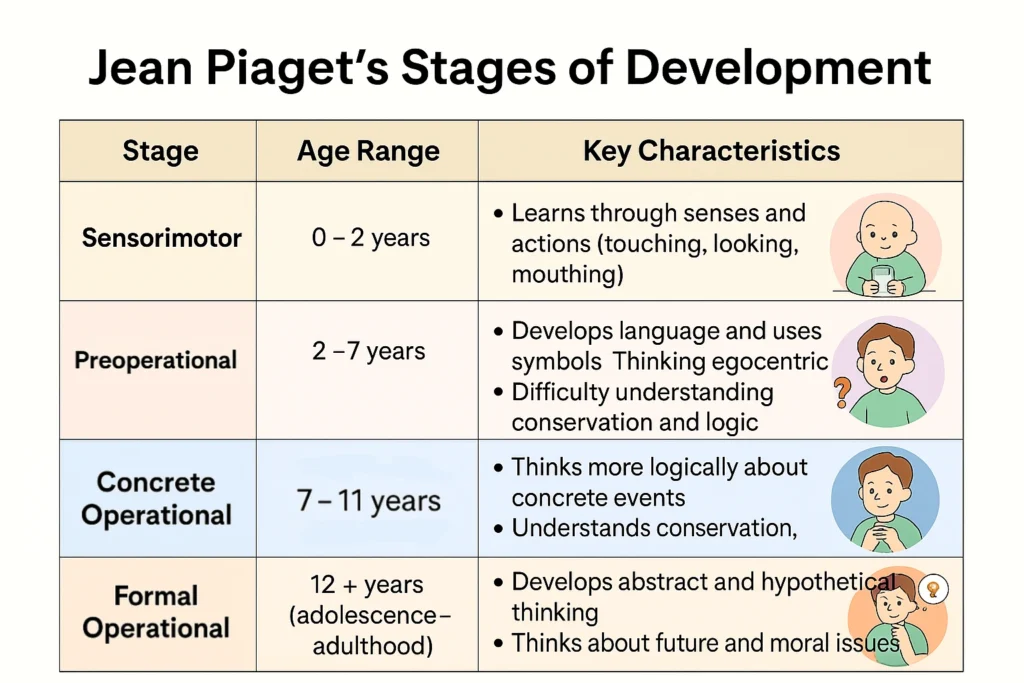
Understanding how children think is one of the most powerful tools for parenting and education. Jean Piaget, a pioneer in developmental psychology, proposed that children move through four stages of cognitive development, each marked by distinct ways of thinking and understanding the world.

Piaget emphasized that children are active learners, constructing knowledge through interaction with their environment (Piaget, 1952). These stages are sequential, meaning each stage builds upon the previous one.

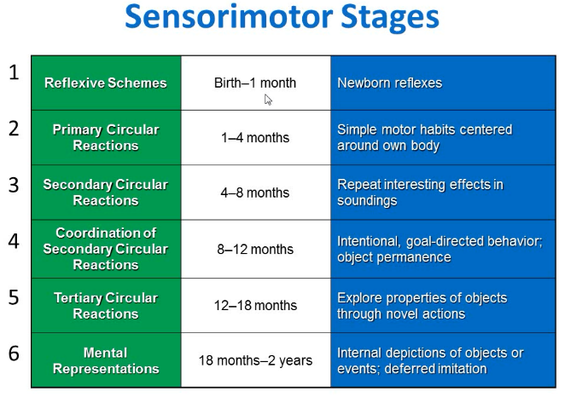
Stage 1: Sensorimotor Stage (Birth to 2 Years)

What Happens in This Stage

In the sensorimotor stage, infants learn through sensory experiences and physical actions. They explore the world by touching, seeing, hearing, and moving.

A major milestone in this stage is object permanence—the understanding that objects continue to exist even when they are not visible.

Key Characteristics

  • Learning through senses and movement
  • Development of object permanence
  • Beginning of intentional actions
  • Early memory development

Parent Guide

Parents should focus on interaction and stimulation. Talking, playing, and responding to the child’s actions are essential for brain development.

Consistent emotional bonding also supports cognitive and emotional growth.

Activities at Home

  • Peek-a-boo games
  • Sensory toys (soft, colorful, textured)
  • Mirror play
  • Simple cause-and-effect toys

When to Worry?

  • No response to sounds or visual stimuli
  • Lack of eye contact
  • No attempt to explore surroundings
  • Delayed motor development

Early concerns may require evaluation for developmental delays or conditions such as Autism Spectrum Disorder.

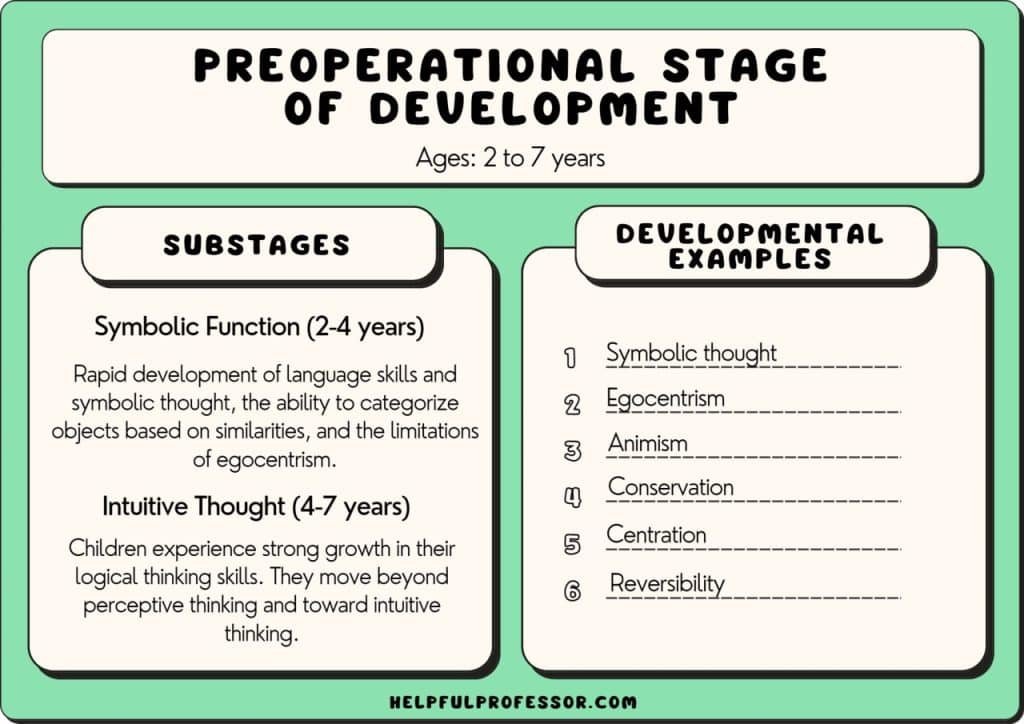
Stage 2: Preoperational Stage (2 to 7 Years)

What Happens in This Stage

Children begin to use language, symbols, and imagination. However, their thinking is still egocentric, meaning they struggle to see perspectives other than their own.

They also show animism, believing that objects have feelings or intentions.

Key Characteristics

  • Rapid language development
  • Symbolic thinking (pretend play)
  • Egocentrism
  • Difficulty understanding logic

Parent Guide

Encourage communication and imagination. Parents should engage in conversations, storytelling, and play-based learning.

Avoid expecting logical reasoning beyond their developmental level.

Activities

  • Pretend play (role-playing games)
  • Storytelling and reading
  • Drawing and creative activities
  • Simple puzzles

When to Worry?

  • Limited or no speech development
  • Difficulty understanding simple instructions
  • Lack of social interaction
  • No engagement in pretend play

Persistent issues may require assessment by a developmental specialist.

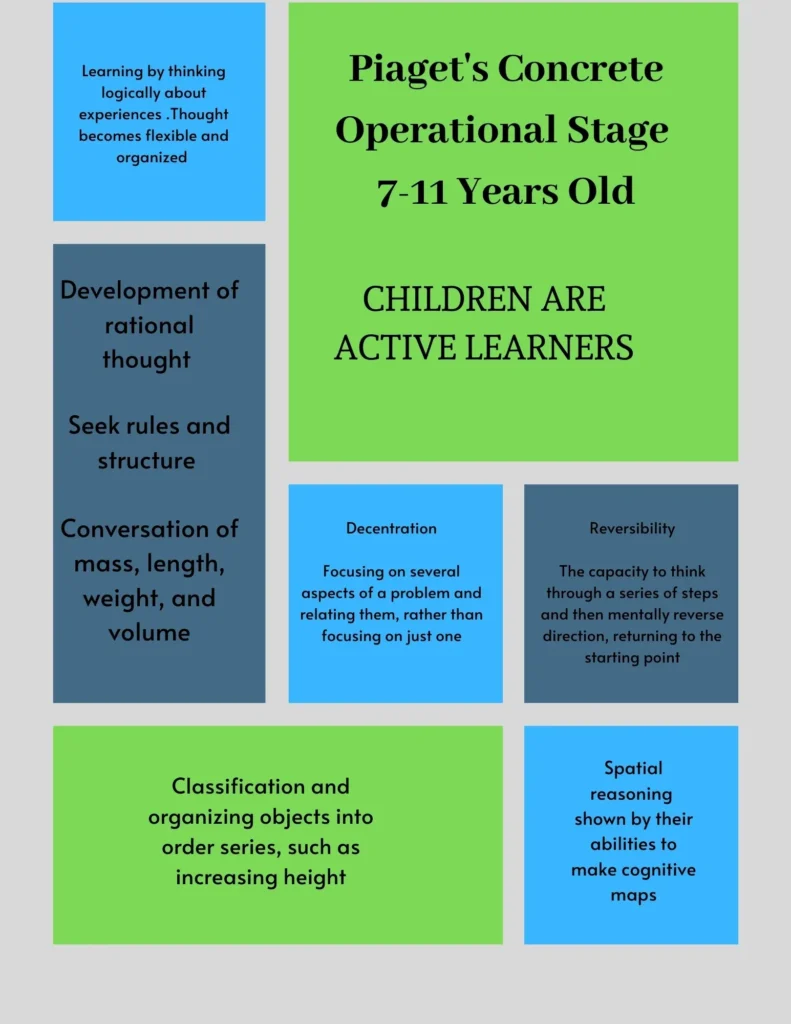
Stage 3: Concrete Operational Stage (7 to 11 Years)

What Happens in This Stage

Children begin to think logically about concrete events. They understand concepts such as conservation (quantity remains the same despite changes in shape) and can solve problems more systematically.

Key Characteristics

  • Logical thinking about real situations
  • Understanding of conservation
  • Improved problem-solving
  • Reduced egocentrism

Parent Guide

Support learning through real-life examples and hands-on experiences. Encourage questioning and problem-solving.

This is a critical stage for building academic confidence.

Activities

  • Math games and puzzles
  • Science experiments
  • Group activities and teamwork
  • Strategy-based games

When to Worry

  • Difficulty understanding basic concepts
  • Struggles with attention or learning
  • Social withdrawal or peer conflict
  • Low confidence in school tasks

Concerns may relate to learning difficulties or attention-related issues.

Stage 4: Formal Operational Stage (12 Years and Above)

What Happens in This Stage

Adolescents develop abstract thinking and reasoning. They can think about hypothetical situations, plan for the future, and analyze complex ideas.

Key Characteristics

  • Abstract and logical thinking
  • Hypothetical reasoning
  • Problem-solving skills
  • Identity exploration

Parent Guide

Encourage independent thinking and decision-making. Engage in discussions about ideas, values, and future goals.

Respect autonomy while providing guidance.

Activities

  • Debates and discussions
  • Problem-solving challenges
  • Goal-setting exercises
  • Critical thinking tasks

When to Worry

  • Persistent difficulty in reasoning or decision-making
  • Emotional instability affecting daily life
  • Risk-taking behavior without awareness of consequences
  • Social or academic withdrawal

Professional guidance may be needed if issues interfere with functioning.

Why Piaget’s Theory Still Matters

Piaget’s theory provides a structured way to understand how children think at different ages. It helps parents set realistic expectations and respond appropriately.

Although modern research has expanded on his work, the core idea remains influential: children learn best when experiences match their developmental stage.

Final Thoughts

Every child develops at their own pace, but understanding developmental stages helps parents provide the right support at the right time.

Instead of expecting children to think like adults, recognizing their stage allows for better communication, effective teaching, and healthier development.

REFERENCES (APA 7)

  • Piaget, J. (1952). The origins of intelligence in children. International Universities Press.
  • Piaget, J. (1964). Development and learning. Journal of Research in Science Teaching.
  • American Psychiatric Association. (2013). Diagnostic and statistical manual of mental disorders (5th ed.).
Posted on Leave a comment

Hyperactivity in Children

Hyperactivity in Children: A Story Every Parent Will Recognize

It usually starts the same way.

A child who cannot sit still. Constant movement. Endless questions. Interruptions. Energy that never seems to stop.

At first, it feels normal. “Just an active child,” people say.

But over time, it becomes exhausting. Homework is incomplete. Instructions are ignored. Social situations become difficult. And parents begin to wonder—is this normal, or something more?

This is where understanding hyperactivity in children becomes important.

What Hyperactivity Really Means?

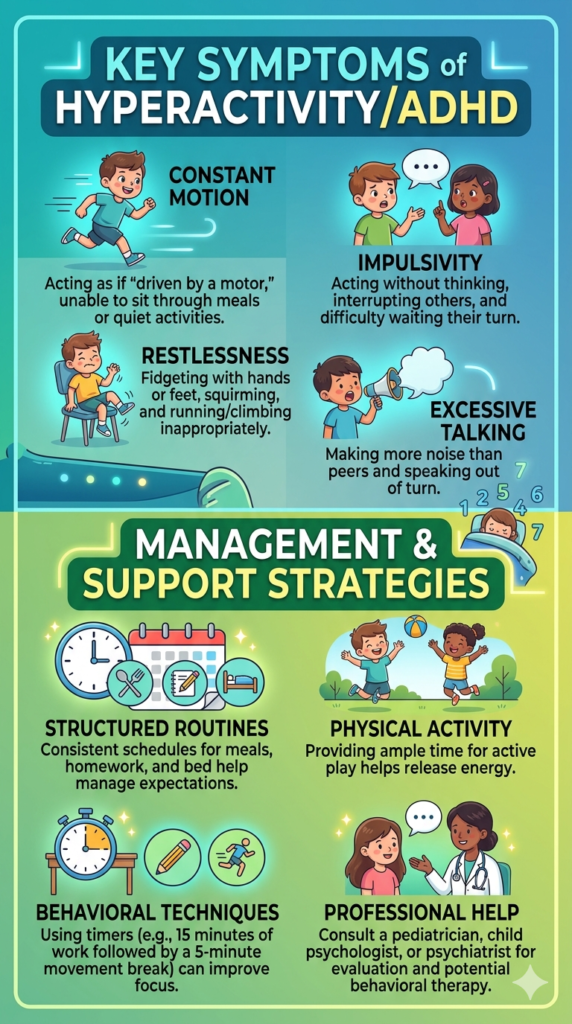
Hyperactivity is not just “too much energy.” It is a pattern of behavior where a child struggles with self-control, attention, and impulse regulation.

Some children run, jump, and talk constantly. Others appear distracted, unable to focus, or forgetful. In many cases, these patterns are linked to attention-deficit/hyperactivity disorder (ADHD), though not every hyperactive child has ADHD.

Clinical guidelines from the American Psychiatric Association explain that symptoms must be persistent, occur in multiple settings, and affect daily functioning to be considered a disorder (APA, 2013).

The Different Faces of Hyperactivity

Hyperactivity does not look the same in every child.

Some children cannot sit still, constantly moving and interrupting. Others appear quiet but are mentally distracted, unable to focus. Many show a combination of both.

This is why hyperactivity is often described in three patterns:

  • Hyperactive-impulsive
  • Inattentive
  • Combined

Understanding this helps parents respond more effectively instead of reacting with frustration.

Is there any difference between hyperactivity and ADHD?

Yes, there is a distinct difference. Hyperactivity is a behavior (constant movement, high energy), while ADHD (Attention-Deficit/Hyperactivity Disorder) is a chronic neurological condition that includes hyperactivity as just one of its potential symptoms. A person can have high energy without having ADHD, but a person with hyperactive-type ADHD cannot easily control their hyperactivity.

Here are the key differences:

  • Hyperactivity (The Behavior): Represents a high level of physical energy, such as fidgeting, inability to sit still, running around, or constant talking.
  • ADHD (The Condition): A clinical diagnosis requiring symptoms to be persistent, present in multiple settings (home/school/work), and causing significant impairment. ADHD can exist without hyperactivity (Inattentive Type).

Key Differences Summary:

  • Control: Children with high energy (hyperactivity) can often control their behavior with prompting. Children with ADHD struggle to regulate their behavior even when they try to, often appearing “driven by a motor”.
  • Scope: ADHD includes three types: Predominantly Hyperactive-Impulsive, Predominantly Inattentive (no hyperactivity), and Combined.
  • Focus: Hyperactivity is purely physical. ADHD involves a triad of challenges: Inattention, Hyperactivity, and Impulsivity.

The Signs Parents Often Notice First

Most parents recognize hyperactivity through daily struggles.

A child who cannot stay seated in class. One who starts tasks but never finishes. A child who speaks out of turn, interrupts conversations, or acts without thinking.

At home, it may look like constant movement, difficulty following instructions, or resistance to routine.

These are not signs of laziness or disobedience. They reflect a developing brain that is still learning control.


Why Hyperactivity Happens?

Hyperactivity is not caused by one single factor. It is a combination of brain development, genetics, and environment.

Research shows that differences in brain function, especially in attention and impulse control systems, play a major role (Thapar et al., 2017).

At the same time, children learn behavior from their surroundings. According to Albert Bandura, repeated patterns of attention and response shape behavior over time.

This means the environment can either reduce or increase hyperactivity.

What Parents Can Do in the Moment?

When a child is hyperactive, the instinct is often to stop the behavior immediately. But control alone does not work.

Calm response works better than control.

Instead of long instructions, use short and clear directions. Instead of forcing stillness, allow structured movement. Instead of reacting emotionally, stay steady.

Children learn regulation from the adult in front of them.

The Power of Small Structure

One of the biggest changes parents can make is simple: routine.

Children with hyperactivity respond strongly to predictable structure. When they know what comes next, their behavior becomes more organized.

Breaking tasks into small steps also helps. A long instruction feels overwhelming, but a short task feels achievable.

These small changes reduce frustration—for both child and parent.

Nutrition and Hyperactivity: What Really Matters

Parents often ask if food causes hyperactivity. The answer is not simple.

Diet does not directly cause hyperactivity, but it can influence behavior.

Balanced meals with protein, whole grains, and healthy fats support stable energy levels. Omega-3 fatty acids, found in fish and nuts, are linked to better brain function (Nigg et al., 2012).

At the same time, excessive sugar and processed foods may increase restlessness in some children.

The goal is not restriction—it is balance.

How Occupational Therapy Helps?

For many children, hyperactivity is linked to difficulty in processing sensory input.

This is where occupational therapy becomes important.

Therapists help children:

  • Improve focus
  • Regulate energy
  • Develop daily skills
  • Manage sensory input

Through structured activities, children gradually learn control instead of being forced into it.

When to Worry and Seek Help?

Every child is active. But not every child struggles.

Parents should consider professional help if behavior:

  • Interferes with school or relationships
  • Appears in multiple settings
  • Includes aggression or extreme impulsivity
  • Does not improve with routine and guidance

Early support leads to better outcomes and reduces long-term challenges.

How to Reduce Hyperactivity Over Time?

There is no instant solution, but there is a clear direction.

Consistency reduces chaos. Structure improves focus. Positive reinforcement builds better habits.

Limiting screen time, encouraging physical activity, and maintaining sleep routines all play a role.

Most importantly, children need guidance—not punishment.

Top 10 Parenting Tips That Actually Work

  1. Stay calm, even when behavior is difficult
  2. Use clear and simple instructions
  3. Create a consistent daily routine
  4. Break tasks into small steps
  5. Encourage physical activity daily
  6. Limit screen exposure
  7. Reinforce positive behavior
  8. Support good sleep habits
  9. Work closely with teachers
  10. Seek help when needed

Final Thought

Hyperactivity is not a failure of parenting. It is not simply bad behavior.

It is a sign that a child needs support in learning control, focus, and regulation.

When parents shift from control to understanding, everything begins to change.

If you have any questions, please comment below:

REFERENCES (APA 7)

  • American Psychiatric Association. (2013). Diagnostic and statistical manual of mental disorders (5th ed.).
  • Thapar, A., Cooper, M., Eyre, O., & Langley, K. (2017). What have we learnt about ADHD from genetics? The Lancet Psychiatry.
  • Nigg, J. T., Lewis, K., Edinger, T., & Falk, M. (2012). Meta-analysis of diet and ADHD. Journal of the American Academy of Child & Adolescent Psychiatry.
  • Bandura, A. (1977). Social learning theory. Prentice Hall.
Posted on Leave a comment

Behavioral Issues in Children

Behavioral Issues in Children: Age-Wise Understanding and Parenting Guide

Behavioral issues in children are among the most common concerns for parents. From toddler tantrums to teenage rebellion, children at every stage display behaviors that can be challenging. However, not all difficult behavior is abnormal—many are part of natural development.

The key is to understand what is normal, what is concerning, and how to respond effectively. When parents use the right strategies at the right stage, many behavioral issues can be prevented or reduced.

Why Behavioral Issues Occur

Behavior is a form of communication. Children express needs, emotions, and frustrations through actions when they lack the skills to express them verbally.

According to Albert Bandura, children learn behavior through observation and reinforcement. Parenting style, environment, and interaction patterns strongly influence behavior development.

Behavioral Issues in Toddlers (1–3 Years)

Common Issues

Toddlers often show:

  • Tantrums and emotional outbursts
  • Aggression (hitting, biting)
  • Refusal to follow instructions
  • Separation anxiety

These behaviors occur because emotional regulation and communication skills are still developing.

How to Prevent

Consistent routines, clear boundaries, and responsive caregiving reduce behavioral problems. Early communication support is essential.

How Parents Should Respond

Stay calm during tantrums, acknowledge feelings, and set limits without punishment. Modeling behavior is more effective than forcing compliance.

Behavioral Issues in Early Childhood (4–7 Years)

Common Issues

Children may show:

  • Defiance and rule-breaking
  • Attention-seeking behavior
  • Fear and anxiety
  • Difficulty sharing or cooperating

At this stage, children are developing independence and social understanding.

How to Prevent

Encourage structured routines, positive reinforcement, and emotional expression. Teaching social skills early helps prevent conflicts.

How Parents Should Respond

Use consistent discipline, explain rules clearly, and reinforce positive behavior instead of focusing only on mistakes.

Behavioral Issues in Middle Childhood (7–11 Years)

Common Issues

Children may experience:

  • Low self-esteem
  • Academic stress
  • Peer conflicts
  • Behavioral resistance

This stage involves comparison with peers and performance expectations.

How to Prevent

Support confidence, encourage effort over results, and promote healthy peer interaction.

How Parents Should Respond

Maintain open communication, guide problem-solving, and avoid harsh criticism.

Behavioral Issues in Adolescence (12–18 Years)

Common Issues

Adolescents often show:

  • Mood swings
  • Rebellion against authority
  • Risk-taking behavior
  • Identity confusion

According to Erik Erikson, this stage focuses on identity development, which explains emotional and behavioral changes.

How to Prevent

Strong parent-child relationships, open communication, and clear boundaries reduce risky behavior.

How Parents Should Respond

Respect independence while maintaining guidance. Avoid control-based parenting and encourage decision-making.

Teenage Behavioral Issues (13–19 Years)

Common Issues

Teenagers may experience:

  • Anxiety and depression
  • Peer pressure
  • Digital addiction
  • Withdrawal or aggression

At this stage, cognitive abilities improve, but emotional regulation is still developing.

How to Prevent

Promote mental health awareness, balanced lifestyle, and positive social connections.

How Parents Should Respond

Be supportive, non-judgmental, and actively involved in their lives.

General Prevention Strategies Across All Ages

Behavioral issues can often be reduced through consistent parenting practices.

  • Maintain routines and structure
  • Encourage open communication
  • Model positive behavior
  • Reinforce good behavior
  • Provide emotional support
  • Limit negative environmental influences

Research shows that consistent, responsive parenting supports healthy emotional and behavioral development (Shonkoff & Phillips, 2000).

Signs When to Seek Professional Help

While many behaviors are normal, certain signs require attention from a psychologist or psychiatrist.

Seek Professional Help If:

  • Behavior is extreme, frequent, or worsening
  • The child harms themselves or others
  • There is a delay in speech or social interaction
  • Emotional problems persist (anxiety, depression)
  • The child struggles to function in daily life
  • There are signs of developmental disorders such as Autism Spectrum Disorder

Clinical guidelines emphasize early intervention to improve long-term outcomes (American Psychiatric Association, 2013).

Parental Guide: What Works Best

What To Do

  1. Stay calm and consistent
  2. Listen actively to your child
  3. Set clear expectations
  4. Encourage emotional expression
  5. Use positive reinforcement
  6. Build strong relationships
  7. Monitor environment and influences
  8. Teach problem-solving skills
  9. Support independence appropriately
  10. Seek help when needed

What To Avoid

  • Harsh punishment
  • Ignoring emotional needs
  • Inconsistent rules
  • Comparing children
  • Over-controlling behavior

🔷 Final Thoughts

Behavioral issues are not simply problems—they are signals. They reflect a child’s developmental stage, emotional state, and environment.

When parents understand these signals and respond with patience, structure, and awareness, children develop healthier behavior patterns and emotional strength.

Early understanding and timely intervention make the biggest difference.

🔷 REFERENCES (APA 7)

  • American Psychiatric Association. (2013). Diagnostic and statistical manual of mental disorders (5th ed.).
  • Shonkoff, J. P., & Phillips, D. A. (2000). From neurons to neighborhoods: The science of early childhood development. National Academy Press.
  • Bandura, A. (1977). Social learning theory. Prentice Hall.
  • Erikson, E. H. (1950). Childhood and society. Norton.